
Chemical Dosing Pumps
Chemical dosing pumps provide accurate and controlled dosing of detergents, active foam, shampoo, wax, drying agents and other liquid chemicals in professional car wash and industrial systems. UMYTEC offers dosing solutions from leading manufacturers including Dosatron, EMEC and Injecta.
Choose from water-powered proportional dosing pumps, electromagnetic metering pumps and pneumatic dosing systems according to the required chemical flow, dosing concentration, injection pressure and control method. Correctly selected dosing equipment helps maintain consistent chemical concentration, repeatable washing results and efficient chemical consumption.
Browse our professional dosing pumps below or use the technical guide to select the most suitable dosing technology for your application.
Product sorting
List of products
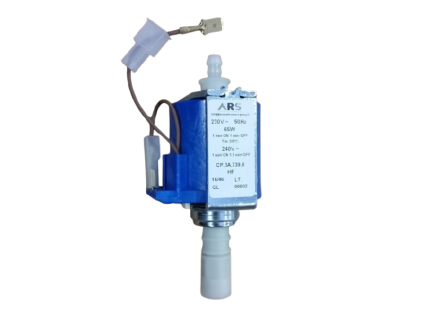
ARS vibration pump for dispensing compatible auxiliary liquids such as tyre dressing or air freshener. Rated flow is 0.6 l/min.

Flexible transparent PVC hose for chemical suction lines and compatible EMEC or Venturi dosing equipment. Sold by the metre.
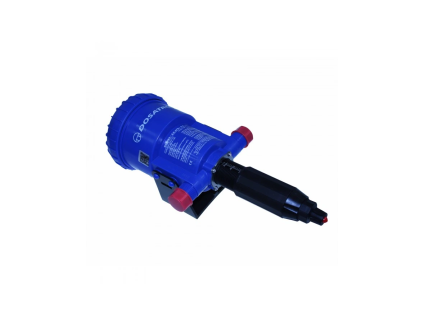
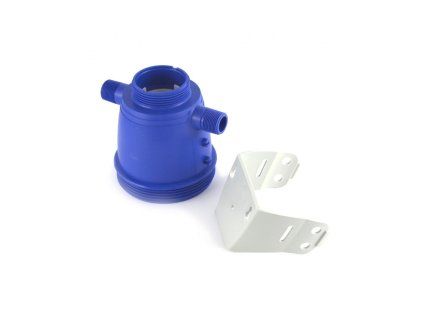
Lower body assembly for compatible Dosatron D3 pumps. Includes the mixing chamber, seal and wall mounting bracket.
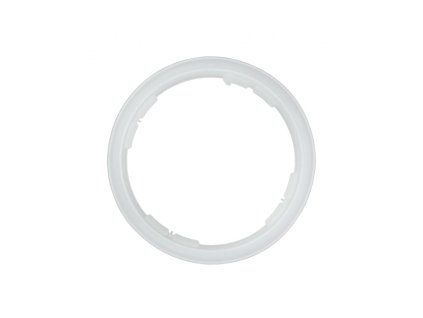
Replacement lower piston collar for compatible Dosatron D3 dosing pumps. Allows servicing of the piston assembly without replacing the complete dosing unit.

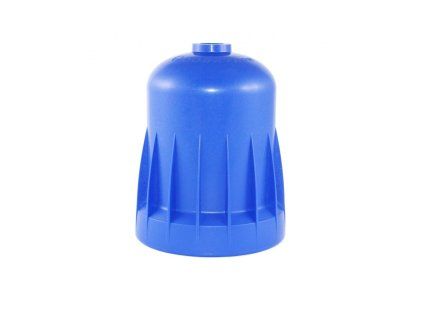
Original Dosatron PDI685 upper body cover for compatible D3 dosing pumps. A replacement housing component for servicing the dosing unit.
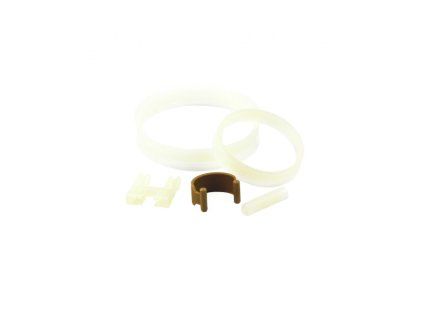
Repair kit with upper and lower piston collars and a thermoplastic spring. Designed for servicing compatible Dosatron D3 dosing pumps.

Dosatron D3 cover assembly supplied with an air vent component and seal. Designed for repairing compatible D3 chemical dosing pumps.
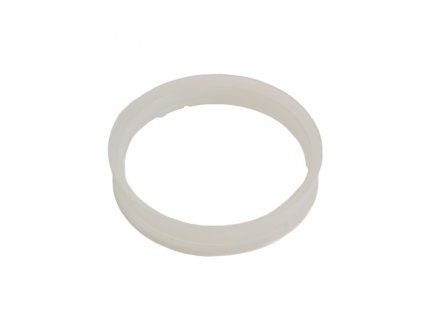
Replacement upper piston collar for compatible Dosatron D3 dosing pumps. Supports repair of the piston assembly in professional dosing equipment.
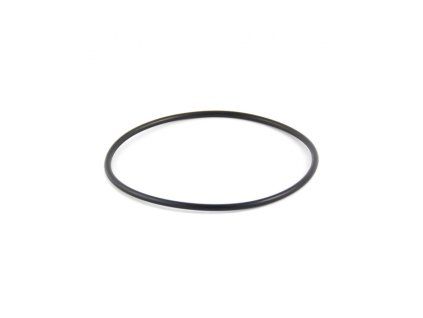
Replacement O-ring for the upper cover of compatible Dosatron D3RE dosing pumps. Restores the cover seal when the original ring is worn or damaged.

Dosatron D3RE2 AO dosing pump for compatible organic acids. Provides proportional dosing from 0.2% to 2% at water flows up to 3,000 l/h.
Professional chemical dosing pumps
Chemical dosing pumps deliver a controlled quantity of liquid chemical into a water or process system. They are used wherever detergent concentration, chemical consumption and repeatability need to be controlled more accurately than with manual mixing.
In professional car wash systems, dosing pumps can supply chemicals such as pre-wash detergent, active foam, shampoo, wheel cleaner, wax and drying agent. They are also widely used in industrial cleaning, water treatment and other applications requiring controlled chemical injection.
Different applications require different dosing technologies. UMYTEC therefore offers professional solutions from Dosatron, EMEC and Injecta, covering water-powered proportional dosing as well as electrically and pneumatically operated metering pumps.
Too little chemical can reduce cleaning performance, while excessive dosing increases operating costs and can make rinsing more difficult. A correctly selected dosing pump helps maintain a repeatable chemical concentration and more predictable consumption.
Types of chemical dosing pumps
The correct dosing technology depends on the required chemical flow, water flow, injection pressure, desired concentration, available utilities and the level of control required.
| Dosing technology | Typical brand | Power source | Main advantage |
|---|---|---|---|
| Water-powered proportional dosing | Dosatron | Water flow and pressure | Chemical dosing proportional to water consumption without electricity |
| Electromagnetic diaphragm dosing | EMEC, Injecta | Electricity | Precise and independently adjustable chemical flow |
| Pneumatic dosing | EMEC | Compressed air | Suitable for professional installations with available compressed air |
| Peristaltic dosing | Depending on model and application | Electricity | Simple fluid path and suitability for selected chemical applications |
Proportional dosing pumps
A proportional dosing pump maintains a defined relationship between the quantity of water passing through the system and the quantity of chemical being added.
This is especially useful when the water flow can change but the required chemical dilution should remain approximately constant.
Electromagnetic dosing pumps
Electromagnetic dosing pumps use a solenoid-driven diaphragm to deliver defined volumes of chemical in repeated strokes.
Depending on the model, the output can be manually adjusted or controlled by an external signal.
Available control methods can include:
- constant dosing,
- manual output adjustment,
- pulse-proportional dosing,
- analogue signal control,
- external ON/OFF control,
- process-controlled dosing.
Pneumatic dosing pumps
Pneumatic dosing pumps use compressed air rather than an electrical solenoid to operate the dosing mechanism.
They can be particularly useful in professional car wash installations where a suitable compressed-air supply is already available.
Dosatron proportional dosing pumps
Dosatron dosing pumps operate using water flow and pressure and do not require an electrical power supply.
The dosing pump is installed directly into the water line. Water passing through the unit drives the internal hydraulic mechanism, which draws concentrated chemical from a separate container and injects it into the water.
The volume of chemical delivered is proportional to the amount of water passing through the pump.
When is Dosatron a good choice?
Dosatron is particularly suitable when:
- a defined water-to-chemical ratio is required,
- water flow can vary during operation,
- no electrical supply is available or desired,
- automatic dosing should begin whenever water flows,
- a simple mechanical proportional dosing system is preferred.
Dosatron dosing percentage
Depending on the model, the required concentration is adjusted directly on the dosing unit.
For example, a setting of 1% corresponds approximately to one part concentrated product per 100 parts of total solution, while a 2% setting provides approximately twice that chemical concentration.
Always follow the dosing range specified for the exact Dosatron model.
Important Dosatron selection parameters
- minimum water flow,
- maximum water flow,
- operating water pressure,
- minimum dosing percentage,
- maximum dosing percentage,
- chemical compatibility,
- seal configuration,
- connection size.
Two Dosatron models with a similar water-flow capacity can have very different dosing ranges. The required percentage and chemical compatibility must therefore be checked before selecting the pump.
EMEC chemical dosing pumps
EMEC offers professional chemical metering pumps for applications requiring controlled and adjustable chemical delivery.
The range includes electromagnetic dosing pumps with different flow rates, working pressures, materials and control options, as well as dosing solutions developed specifically for professional applications such as car washing.
EMEC electromagnetic dosing pumps
An electromagnetic dosing pump is particularly useful when the chemical quantity needs to be controlled independently of the main water flow.
Depending on the selected model, control options can include constant dosing, proportional dosing and external process signals.
EMEC dosing for car wash applications
Chemical dosing in car wash equipment often requires relatively small but accurately repeatable chemical quantities.
EMEC also offers its R Series for car wash applications. These pumps use compressed air and are designed specifically for dosing chemicals in vehicle washing installations.
When selecting an EMEC pump, check:
- chemical flow in l/h,
- maximum injection pressure,
- required dosing control,
- pump-head materials,
- seal and diaphragm compatibility,
- available power source.
Injecta chemical dosing pumps
Injecta manufactures a wide range of professional dosing pumps for chemical metering and process applications.
The range includes compact electromagnetic pumps for low chemical consumption as well as higher-capacity dosing equipment for demanding installations.
Injecta Hydra Series
The Hydra Series includes electromagnetic diaphragm dosing pumps with different control configurations.
Depending on the version, functions can include:
- constant dosing,
- manual flow adjustment,
- external proportional control,
- analogue signal control,
- digital control,
- level-probe connection.
Injecta Athena Series
The Athena Series extends the available dosing capacity and pressure range and is suitable for applications requiring different hydraulic performance or more advanced control options.
Choosing between Hydra, Athena and other Injecta families should therefore be based primarily on required chemical flow, injection pressure, control method and chemical compatibility.
How to choose the correct chemical dosing pump
A dosing pump should never be selected according to brand or maximum flow alone.
The complete dosing application must first be defined.
1. Identify the chemical
Start with the exact chemical product and its concentration.
This information is necessary for selecting compatible:
- pump head material,
- diaphragm,
- seals,
- valves,
- suction hose,
- injection hose.
2. Determine required chemical consumption
For electromagnetic and pneumatic dosing pumps, calculate the required chemical flow in litres per hour (l/h) or another appropriate unit.
For proportional water-powered pumps, determine the required dosing percentage together with the water-flow range.
3. Determine the injection pressure
The dosing pump must be capable of delivering the required chemical flow against the actual pressure present at the injection point.
A dosing pump may provide its maximum l/h output only at relatively low discharge pressure. Always verify the manufacturer's flow-versus-pressure specification for the exact model.
4. Choose the control method
Determine whether the installation requires:
- simple constant dosing,
- manual adjustment,
- water-flow proportional dosing,
- pulse control,
- analogue control,
- external machine control.
5. Check available utilities
The available energy source can determine which dosing technology is most suitable:
- Dosatron: water flow and pressure,
- electromagnetic EMEC / Injecta: electrical supply,
- pneumatic dosing: compressed air.
- Exact chemical
- Chemical concentration
- Required dosage
- Required chemical flow in l/h
- Water flow where relevant
- Pressure at the injection point
- Required control method
- Available electrical supply
- Compressed-air availability
- Chemical compatibility
- Connection size
Understanding dosing pump flow and pressure
Two of the most important specifications of an electric chemical dosing pump are flow rate and maximum working pressure.
Flow rate – l/h
The flow rate indicates how much chemical the pump can deliver over time.
A pump rated at 5 l/h can theoretically deliver up to five litres of chemical per hour under the conditions specified by the manufacturer.
In many car wash applications, however, actual consumption is substantially lower because the dosing pump only operates while the relevant washing programme is active.
Pressure – bar
The pump must overcome the pressure at the chemical injection point.
A dosing pump rated for 5 bar should therefore not be expected to inject reliably into a line operating above its rated pressure.
Why both values matter
Dosing pumps are often offered in multiple hydraulic versions. One version may provide higher chemical flow at lower pressure, while another provides lower flow at higher pressure.
For this reason, the required l/h and bar must always be considered together.
Chemical compatibility of dosing pumps
Chemical compatibility is critical when selecting dosing equipment.
Professional car wash chemistry can include:
- alkaline pre-wash detergents,
- acidic wheel cleaners,
- active foam concentrates,
- shampoos,
- waxes,
- drying agents,
- special additives.
The pump head, diaphragm, seals, valves and tubing must all be compatible with the concentrated chemical.
Materials commonly found in professional dosing equipment include:
- PVDF,
- PTFE,
- PVC and related technical polymers,
- ceramic valve components,
- EPDM seals,
- FPM/FKM seals.
Compatibility should be checked against the exact chemical formulation, concentration and operating temperature. When necessary, use the chemical manufacturer's Safety Data Sheet before selecting the wetted materials.
Chemical dosing pumps for car washes
Self-service and professional car washes typically use several chemicals that require different dosing rates.
Typical chemicals include:
- pre-wash detergent,
- active foam,
- shampoo,
- wheel cleaner,
- wax,
- drying aid.
Individual dosing pumps make it possible to adjust the consumption of each chemical independently.
This is important because different washing programmes require different chemical concentrations and application rates.
Direct dosing
With direct chemical dosing, concentrate is drawn directly from the chemical container and metered into the relevant water circuit.
Advantages can include:
- independent adjustment of each chemical,
- no large premixing tank in suitable installations,
- easy chemical concentration adjustment,
- better monitoring of individual product consumption.
Proportional water-driven dosing
Dosatron offers a different approach. Chemical quantity is mechanically linked to the volume of water passing through the unit.
This can be useful where a continuously prepared solution at a defined dilution ratio is required.
Maintenance and troubleshooting
Regular maintenance helps preserve dosing accuracy and reduces unexpected downtime.
Components that should be inspected
- chemical suction hose,
- foot valve and suction filter,
- injection valve,
- non-return valves,
- pump diaphragm or dosing piston seals,
- chemical tubing,
- electrical or pneumatic connections,
- chemical level sensor where fitted.
Pump operates but does not draw chemical
Typical causes include:
- empty chemical container,
- air in the suction line,
- blocked suction filter,
- blocked injection valve,
- contaminated or worn non-return valves,
- incorrect pump setting,
- damaged seals or diaphragm,
- excessive injection pressure.
If the chemical container has been completely emptied, the dosing pump may need to be primed or deaerated before normal chemical delivery resumes.
Frequently asked questions about chemical dosing pumps
What is a chemical dosing pump?
A chemical dosing pump delivers a controlled amount of liquid chemical into a water or process system. Depending on the technology, the output can be constant, manually adjustable or proportional to water flow or an external control signal.
Which dosing pump is suitable for a car wash?
The correct pump depends on the chemical, required flow, injection pressure and control method. UMYTEC offers water-powered Dosatron proportional pumps as well as EMEC and Injecta electromagnetic or pneumatic dosing solutions suitable for professional chemical dosing.
Does a Dosatron require electricity?
No. Dosatron dosing pumps are powered by the pressure and flow of the water passing through them.
What is the difference between Dosatron and an electromagnetic dosing pump?
Dosatron mechanically doses chemical in proportion to the volume of water passing through the unit and does not require electricity. An electromagnetic dosing pump actively meters chemical using an electrically driven diaphragm and can be controlled independently from the water flow.
How do I calculate the required dosing pump size?
Determine the required chemical concentration, water consumption and resulting chemical consumption. For electric dosing pumps, the required chemical flow in l/h and injection pressure in bar are the key hydraulic parameters.
Can a dosing pump be oversized?
Yes. A significantly oversized pump may need to operate at the bottom of its adjustment range, which can make accurate low-volume dosing more difficult. Select a pump whose normal operating point falls comfortably inside its usable range.
Can the same dosing pump be used for acid and alkaline chemicals?
Only if all wetted materials are compatible with both products. In professional car wash installations, separate pumps are normally used for individual chemicals. Compatibility should always be checked against the exact chemical formulation.
Why is my dosing pump running but not dosing chemical?
Check the chemical level, suction filter, suction hose, pump priming, non-return valves and injection valve. Air in the suction line and excessive pressure at the injection point are also common causes.
What information is required to select a replacement dosing pump?
Provide the manufacturer and model of the existing pump, chemical being dosed, required chemical flow, injection pressure, power supply and control method. For car wash equipment, also provide the washing programme and information about the point where the chemical is injected.
Need help selecting the correct dosing pump?
Send UMYTEC the chemical type, required concentration, water flow, required chemical flow, injection pressure and control method. If you are replacing an existing dosing pump, include its complete manufacturer and model designation. We can help identify the appropriate Dosatron, EMEC or Injecta solution for your application.